Ultimate Guide to Sprinter Van Roof Racks
Share
Ultimate Guide to Sprinter Van Roof Racks
Sprinter vans (especially Mercedes-Benz Sprinter models from 2019+ and up) are popular bases for campers, work vans, and adventure rigs[1]. Adding an aftermarket roof rack instantly expands a Sprinter’s cargo capacity. A roof rack turns your MBZ Sprinter van into a true cargo hauler, perfect for gear, ladders, kayaks, bikes or even a rooftop tent[2][3]. Modern racks use lightweight materials and aerodynamic fairings to minimize drag[4]. For example, Flatline Van Co.’s Sprinter racks include wind deflectors (“fairings”) over the front crossbars, which cut wind noise and improve fuel economy when loaded[4]. In short, if you own a Sprinter camper or cargo van and often need extra gear storage, a roof rack is a must-have accessory[3].
Why Install a Roof Rack on Your Sprinter Van?
For Sprinter owners (often searching terms like “Mercedes Sprinter van accessories” or “Sprinter camper roof rack”), the main benefit is increased storage. The Sprinter’s high roof and long wheelbase provide a large flat roof area; a sturdy rack means all that space can carry cargo. With a rack, you can transport bulky or long items (surfboards, lumber, sports gear) outside the van, freeing up interior room[3][4]. This is ideal for camper conversions – many Sprinter camper van builds include racks for solar panels, kayaks or rooftop tents. In fact, as one van life expert notes, installing a Sprinter roof rack “extends your cargo-carrying capacity and frees up space inside your rig,” and even allows oversized gear or an RTT (roof-top tent) on the roof[3].
Moreover, Sprinter vans are so popular for conversions that virtually any rack style you can imagine exists for them[1]. Brands make Sprinter-specific racks (for 144″ or 170″ wheelbases, high roofs or standard roofs) and many are compatible with factory roof rails. Even Mercedes designers expect racks to be used – some Sprinters come with factory tracks or drip rails to mount accessories. Whether you need a lightweight crossbar set or a heavy-duty platform, chances are there’s a Sprinter roof rack to fit your needs.
Figure: A Mercedes Sprinter van fitted with a heavy-duty roof rack and light bar. Modern Sprinter racks (often aluminum) can integrate lighting and gear mounts[4][5].
Types of Sprinter Roof Racks
Sprinter roof racks come in several styles. The two broad categories are: - Slim/low-profile racks: These are usually just 2 or 3 crossbars that attach to the van’s gutters or tracks (like Thule, Rhino‑Rack, or Front Runner Slimpro). They add minimal height and wind resistance. - Full platform/basket racks: These are larger “deck” racks with multiple crossbars and side rails (like Aluminess Double Loop, RoamBuilt Safari Rack, or Flatline Safari Rack). They sit higher and can carry more gear or even people when parked.
Manufacturers often use descriptive names. For example, Aluminess sells “Double Loop” (a basket-style rack) and “Touring Style” (with a front drop bar) systems for Sprinters[6]. They also offer open-front or open-back variants to make loading canoes or kayaks easier[6]. Other brands call baskets “safari racks” or “overland racks.” Conversely, Front Runner’s Slimline II and Slimpro designs are low-profile platform racks with just a few bars[7]. Some racks (like RoamBuilt’s Flatpack) are modular, so you can build just a frame (side rails) and add slats or panels as needed[8].
When choosing a type, consider what you’ll carry. Heavy roof-top tents or loads (over ~500 lb) usually need a full platform rack[2]. Smaller cargo boxes or bikes might only need crossbars. The rack’s floor also varies: some have open slats for tie-downs, others have solid panels or perforated metal for walking. Drop-in T-track or L-track rails are common on modern racks for easily mounting accessories (like on Flatline’s Sprinter rack[9]). Many owners list things like “crossbars, deck, ladder, awning mounts, solar mounts” as features; a good rack will support them all.
Key Features and Considerations
When shopping for a Sprinter roof rack, note these technical aspects:
- Material & Weight: Most racks use aluminum (often T6 or 6000-series) for a lightweight, corrosion-resistant build[10][11]. Steel (like Front Runner’s 3CR12 stainless) appears in some heavy-duty platforms[12]. Aluminum racks can weigh from ~50 lb (for a 144″ high roof crossbar set[13]) up to 200+ lb (for a large welded platform[14][2]). For example, Flatline’s “standard” Sprinter rack (7 bars) weighs about 76 lb total[9], whereas an Aluminess welded rack might weigh ~125 lb or more.
- Load Capacity: Check each rack’s rated load. Lightweight crossbars (like Rhino’s 2-bar RLTF) might carry ~220 lb[13], while modular platforms (like Prinsu) often support 500+ lb static[2]. Front Runner’s Slimline II can handle ~660 lb[12], and Thule’s TracRac bars up to 750 lb[15] (even supporting roof tents). Remember the van’s own roof limit: a Sprinter’s roof is rated ~331 lb (including rack) in motion[16]. In practice, that means after installing a ~125 lb rack you have ~200 lb left for gear when driving[16]. When parked, the roof structure can handle far more (600–800 lb distributed)[17], but always consult the owner’s manual and use safe loads.
- Mounting Style: Racks mount to either the factory rail/track or to the roof gutters/drip rails (often with clamps or pucks). Many Sprinter vans have OEM mounting points under removable plastic pucks[9]. E.g. Flatline’s Sprinter racks use stainless steel pucks that fit into those holes[9]. Gutter-mounted racks (like Thule TracRac) simply clamp under the rain gutters. Aftermarket mounting kits (like Rhino’s RLTF) bolt into the OEM holes for a drill-free install[13]. Some heavy racks do require drilling or professional install: Front Runner notes drilling for Slimline II to ensure a rock-solid fit.
- Wind Noise and Aerodynamics: High-profile racks catch more wind, so many use a wind deflector or fairing at the front. As one maker describes, an aluminum fairing “deflects the wind and keeps your van fuel efficient even with gear loaded”[4]. Low-profile bars (Slimline, Slimpro, etc.) generate less drag but often have small deflectors on the bars themselves. In either case, expect some whistling; consider adding a fairing if noise is an issue.
- Roof Cutouts and Integration: Check if the rack allows for other roof gear. Good racks have cutouts for vents or AC units[18]. Some suppliers offer vent relocation kits or optional panel covers. For example, Tannerack’s feature list boasts “Roof Vent Cutouts” and even “Relocate Solar” for ease of adding solar panels[18]. Flatline’s Sprinter rack has removable side panel sections for mounting a side ladder, and built-in tie-off points (L-track slots) for surfboards or kayaks[19][9]. Many racks are compatible with popular awnings (e.g. Fiamma F45) attached to the side[20]. If you plan on rooftop tents, ensure the rack footprint and weight rating match the tent’s requirements.
- Finishes and Durability: Most high-end racks use powder-coated aluminum or stainless steel, so they resist rust. Check for hardware quality (stainless bolts) and anti-theft features if needed. Some budget racks may use simpler paint. Warranties vary: premium brands often include lifetime warranties on welding/joints.
Top Brands and Models
A wide range of Sprinter roof racks is available. Notable options include:
- Aluminess (USA): Specializes in aluminum racks. Their Double Loop platform and Touring Style racks come in various configurations[6]. They offer both custom (vent-cutout) and modular kits. Aluminess racks are strong and versatile, suited for heavy loads; for example, their touring rack (per forum) has a 500 lb+ static capacity[2]. Aluminess also makes ladders, bumpers, etc., for Sprinters.
- Front Runner Outfitters (Australia): Offers the Slimpro (low-profile bars) and Slimline II (stainless steel platform) kits for Sprinter vans[7][12]. Slimpros are lightweight T6 aluminum racks that fit most Sprinter roofs. The Slimline II is a heavy-duty 3CR12 stainless platform (660 lb capacity[12]). Front Runner’s catalog shows kits for every Sprinter variant (SWB 128″ to XLWB 170″) from 2007 to current[7]. They also make wind deflectors and modular track sets.
- Rhino-Rack (Australia): Known for Pioneer Platforms and RLTF bars. Their 2-bar RLTF kit for Sprinter (using factory tracks) carries ~220 lb[13] and is easily removable. For a full deck, Rhino offers the Pioneer universal platforms with custom legs. Rhino’s catalogs list Sprinter-fit footpacks, backbone systems and more.
- Prinsu Design Studio (USA): Idaho company that makes modular welded racks. Their Sprinter rack (144″ high roof) has a static rating over 500 lb[2]. Prinsu’s racks are fully modular, with drop-in t-slot crossbars, integrated light-bar mounts, and optional ladders[21]. They are known for a low-profile look and USA-made quality.
- Thule (Sweden): The TracRac Van rack (3 aluminum bars) is a popular low-profile roof rack for Sprinters. It clamps to the gutters and carries up to 750 lb[15]. Thule’s built-in wind deflector and adjustable aluminum load stops make it versatile. Thule also sells crossbars that fit Sprinter factory rails or points (e.g. TracRac SR or SRD systems).
- RoamBuilt (USA): Offers two main Sprinter racks. The Flatpack Roof Rack is a do-it-yourself modular kit (aluminum extrusions and panels) starting around $1,955[8]. It’s versatile for solar or decking. The Safari Rack 2.0 (and Safari 2.0 SLB with single light bar) is their welded platform (about $6,700) built for rugged use[22]. RoamBuilt emphasizes American-built durability[5].
- Flatline Van Co. (USA): Sells Low Pro and Standard style Sprinter racks. Their Standard Rack (7-bar) is lightweight (76 lb) and has seven adjustable 10-series aluminum crossbars[4][9]. It includes a front wind fairing and is compatible with Fiamma awnings and roof mounts[20]. They also have a Safari Rack for a more rugged, higher-lift style (about $4,395–$4,995).
- Others: Numerous smaller builders (Owl Vans/Backroad, Rigweld, Sandy Vans, Redned, etc.) make Sprinter racks (often “Baja” or “Feather-lite” models). For example, Sandy Vans Sandbar is a sleek low-profile kit, and Rigweld Baja is a box-rack style. These are often custom-order with similar features (aluminum build, light bars, etc). Brands like Tannerack, Orion Van Gear, Rowe Solis, and even Yakima (with universal bars) have Sprinter products.
Each model differs in shape, color, price and features. In general, expect to pay $1,500–$3,000 for a basic Sprinter rack, up to $5,000–$6,000 for a fully welded custom system[23][24]. Many racks offer “bundle” accessories (mounting kits, fairings, lighting kits).
Installation and Maintenance
Installation varies by rack. Clamp-on bars (like Thule) install quickly (usually with a ratchet under the gutters). Track-mounted kits (like Front Runner or Rhino) attach to factory holes without drilling, using specialized feet or footpacks[13]. Welded platforms often require drilling or professional mounting to ensure strength. For example, the Wayward Home team shipped their Sprinter to the Aluminess shop in California for a forklift-assisted install of a custom rack[25]. If installing yourself, follow instructions carefully and use thread-locking compound. Be sure to evenly torque all bolts. Always lift the rack on with at least two people or mechanical help, as these racks are heavy and awkward.
After installation, maintenance is simple: regularly check all fasteners, especially after the first few drives. Clean the rack and touch up any chipped paint to prevent corrosion (though most are powder-coated or anodized). If your rack has electronics (e.g. LED light bars, wiring for accessories), verify connectors are weather-proof. Also keep within recommended weight limits and distribute loads evenly across the rack. Many users remove heavy racks or loads when not needed to save fuel.
Note the Sprinter’s roof load limit: Mercedes rates around 331 lb while driving (including the rack)[16]. In practice, keep moving loads well below this for safety. (One forum member points out that this is a dynamic rating – parked/static loads can exceed 331 lb, but use caution[17].) Finally, consider vehicle height and clearance – a high rack plus load can approach the legal height limit, so be mindful of garages or low bridges.
Compatible Accessories
A roof rack pairs with other Sprinter accessories:
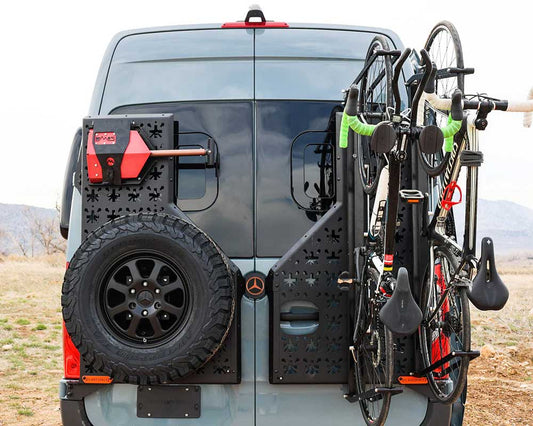
- Ladders: Essential for roof access. You can mount rear door ladders or side ladders right to your rack or rails. Brands like Aluminess, RV Components (RV Team Outfitters), and Flatline make sprinter-specific ladders. Some racks (e.g. Flatline’s) have removable hatch cutouts to route a side-ladder[26]. Adding a ladder means you’ll actually use that extra roof space without climbing chairs!
- Awning: Overhead shade is popular. Wall-mounted awnings (like Fiamma F45, Dometic, or ARB awnings) clamp to the rack’s side rail or van wall. If you have a roof-mount awning, many racks have brackets to attach it. Flatline’s rack explicitly notes compatibility with Fiamma awnings[20]. Check that the rack has open attachment points (often L-track slots) or purchase separate awning adapters.
- Solar Panels: Many vanlifers install panels on the roof. Racks with flat panels or with enough spacing allow panels to sit atop the roof with support. Some systems (and installers) even offer panel mounts or rivnuts in the extrusions. Tannerack’s features (for example) include “Relocate Solar” and cutouts, indicating solar integration[18]. Even if not on the rack itself, the rack can double as a platform to carry extra portable panels. Do plan cable routing (roof vents or grommets) during your build.
- Roof-top Tents (RTT): If you plan to sleep up there, check rack ratings: e.g. Front Runner (750 lb) and Prinsu (500 lb) can hold most tents plus occupants[2][12]. Ensure the tent footprint matches the rack’s shape. Some racks offer integrated tie-down points or holes to secure a tent. Note that adding an RTT raises the vehicle height by the tent plus the rack.
- Cargo Carriers & Boxes: For loose gear, many users add a cargo basket or cargo box. Check that the rack has enough rail length or bolt patterns to fit the basket. Universal cargo carriers like Yakima’s can also mount to L-track slots on some racks.
- Bumpers & Steps: Not roof items, but often part of an adventure build. Bumpers can allow mounting accessories (CB antenna, spare tire, reverse cameras) that complement rooftop gear. Steps (like side steps or rear fold-down steps) help reach the rack more easily. RoamBuilt, for instance, advertises an entire product line for Sprinters: “roof racks to bumpers, ladders to steps…”[5].
- Interior Mods: While not on the roof, the need for storage inside is related. After freeing up space with a rack, you might optimize interior with cabinets, drawers, or coolers. Mention it briefly for completeness: e.g. shelving, bed systems, or interior cargo nets (common Sprinter camper upgrades).
In short, think of the roof rack as the hub: it supports lights, awnings, ladders, solar, tents, and more. When planning your Sprinter van conversion, list out all these accessories so you choose a rack that can integrate them.
Conclusion
A high-quality roof rack is one of the most versatile upgrades for a Mercedes Sprinter van. It instantly turns your Sprinter or MBZ camper into a mobile storage platform. By understanding the types of racks available, the features to look for (aluminum build, aerodynamics, mounting method), and the accessories you want (awning, solar, etc.), you can pick the right rack for your build. Remember to consider weight limits (the Sprinter’s ~331 lb roof rating[16]) and installation methods. With the right rack in place, you’ll be ready to carry bikes, kayaks, gear boxes, or even a rooftop tent on all your Sprinter adventures. Happy travels – and may your roof rack be sturdy and your load be just below the limit!
Sources: We drew on manufacturer specs and van-life resources for this guide[1][18][7][2][4] (see citations) to summarize Sprinter rack options, features, and best practices.
[1] [6] [14] [25] The Best Sprinter Roof Rack Options of 2025 (And What We Chose)
https://www.thewaywardhome.com/sprinter-roof-rack/
[2] [3] [12] [13] [15] [21] Sprinter Roof Rack – Off Road Tents
[4] [9] [19] [20] [26] Sprinter 144" High Roof Standard Roof Rack | Flatline Van Co.
[5] ROAMBUILT | Sprinter Van Accessories – Roof Racks, Bumpers, Ladders
[7] [11] Mercedes-Benz Sprinter Roof Racks & Accessories
[8] [22] Mercedes Sprinter Roof Racks
https://roambuilt.com/collections/roof-racks-all
[10] [18] TANNERACK | MERCEDES SPRINTER ROOF RACKS & ACCESSORIES
https://www.tannerack.com/roof-racks
[16] [17] Roof Rack Weight Limit | Sprinter-Source.com
https://sprinter-source.com/forums/index.php?threads/86885/